
Design Brief:
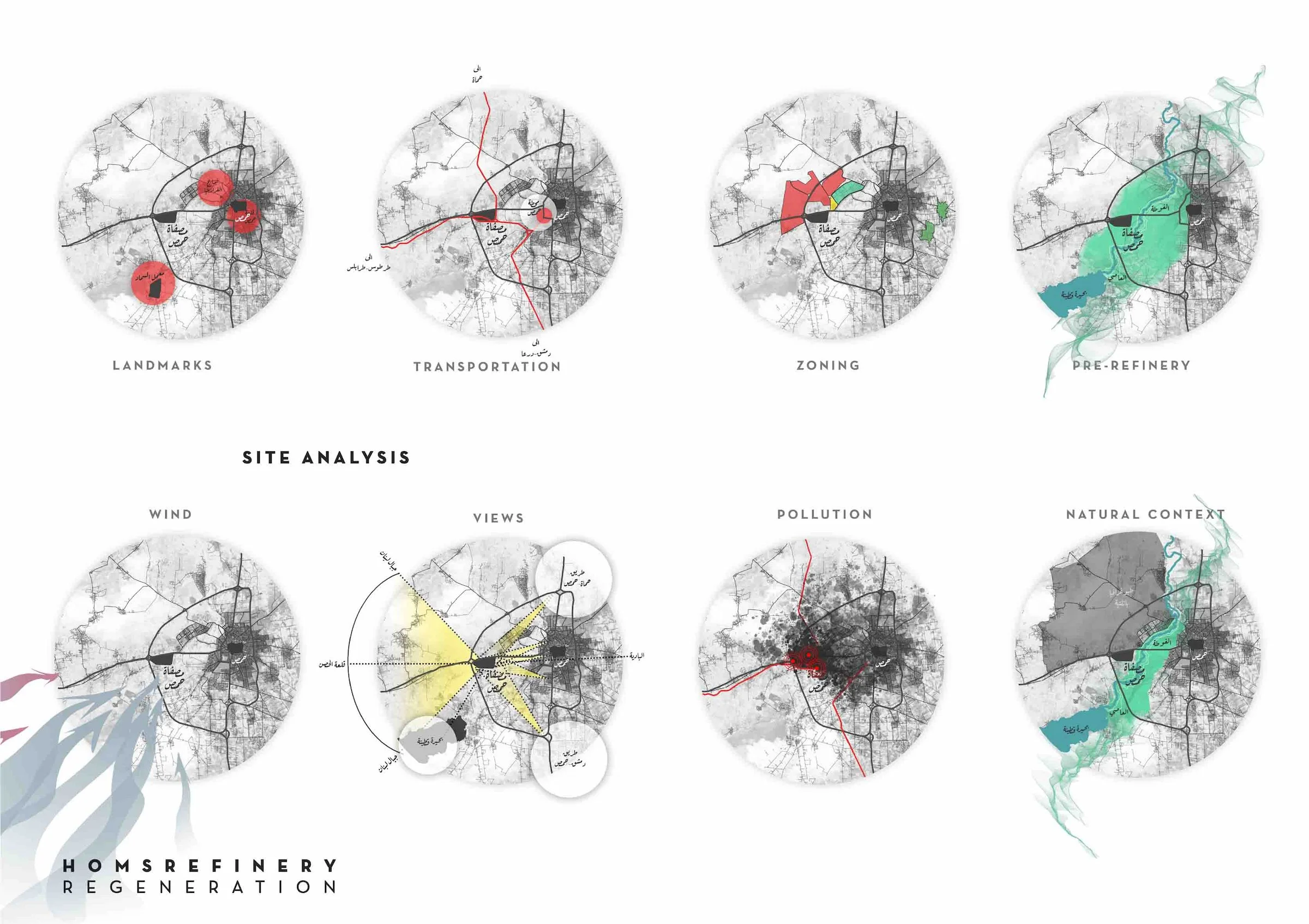
In parallel with the field study, students will develop a site analysis focused on the provided site. This analysis will examine the food infrastructure within a 30-minute radius, documenting the range and types of food-related systems and facilities present in the surrounding area.
Objectives:
The objective of this assignment is for students to analyze the provided site by studying the surrounding food infrastructure within a 30-minute radius. Through research and documentation, students will identify and categorize the variety of food-related systems and facilities, developing an understanding of how local food infrastructure shapes site conditions and informs design decisions.
Duration:
This project will run from Week 1 to Week 3.
Grading:
Rigor, Iteration & Investigation: 20%
Students will demonstrate a willingness to practice the craft of exhaustive exploration.
Design Communication: 60%
Students will be able to professionally communicate by writing, speaking and creating clear and accurate presentation graphics and architectural orthographic drawings.
Design Process: 20%
Student will be able to develop projects and problem solve using the iterative design processes.
Deliverables:
Site analysis base map
Food infrastructure map
Site maps
Circulation map (pedestrian, bike, car, truck)
Landmarks (1 - 2 Mile Radius)
Nodes (1 - 2 Mile Radius)
Enviromental context
(20) Site images
All work drawn and organized in a book format
Stance on the food infrastructure of Delaware County and Otsego County’s as it realties to city, site, and state wide context.
Additional Notes:
Over the next several weeks, you will develop a site analysis centered on the infrastructure that supports our contemporary food systems. This work asks you not only to observe and document but also to think critically, position yourself, and interpret what you discover.
We encourage you to take a stance: explore, question, and bring your own thoughts and considerations to the mapping of these interconnected systems. Food systems are complex, and the infrastructures that sustain them are often hidden, uneven, or contested. As you work, think deeply and from multiple perspectives. You should pay attention to the differing needs of people, communities, ecologies, and economies.