
ARCHITECTURE 470 - Advanced Studio II
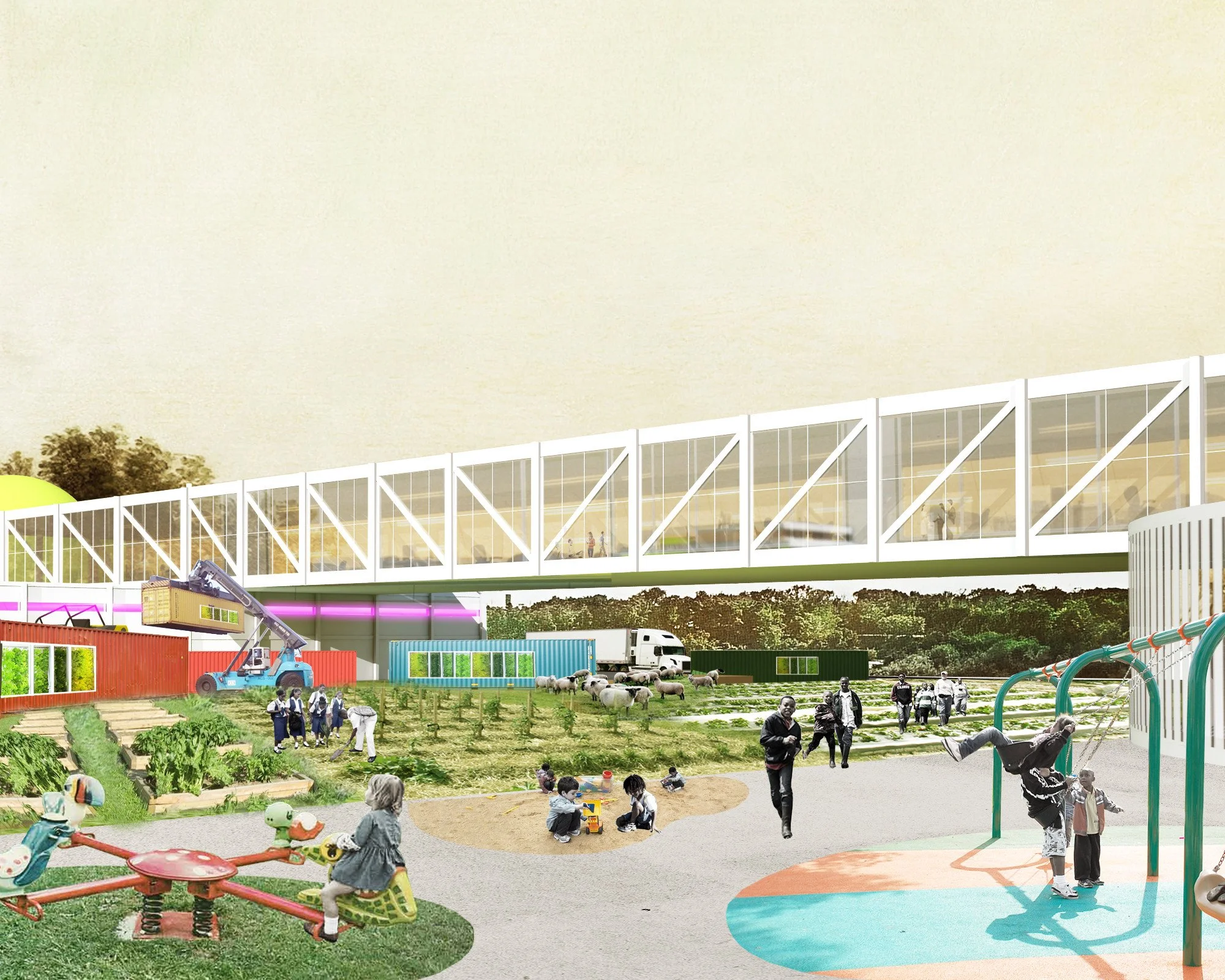
OMA - Food Port
WELCOME:
Welcome to the studio. This semester, you will be working on a project that asks you to think deeply about how design can bring food, community, and spatial experience together into a single, meaningful whole.
Your task is to imagine a place where architecture supports both the practical and social dimensions of food. The building will integrate essential food infrastructure, including spaces for aggregation, storage, processing, and preparation, along with a market and pantry that increase access to local food. At the same time, it will provide welcoming environments for people to gather, learn, and connect through shared meals, cooking demonstrations, and nutrition workshops.
The site and building should unfold as an experience. Outdoor paths, gardens, and transitional spaces will soften the edge between the everyday world and the interior, offering moments of pause, reflection, and community. Inside, the architecture should express care and intention through its tectonic language, embracing heavy timber construction, exposed structure, and thoughtful detailing that communicate sustainability, craft, and warmth.
This is not simply a market or a processing facility. It is a place where food becomes a catalyst for connection, where architecture supports resilience, and where design has the power to nourish both body and spirit.
COURSE DESCRIPTION:
In this second advanced design studio, students will develop an architectural project that synthesizes the architectural, structural, mechanical, regulatory, and conceptual concepts learned over the previously semesters in response to an architectural design brief. This semester long project will be prepared with a clear design intent, be thoughtfully organized, technically proficient, and link theory to practice.
COURSE OBJECTIVES:
In this advanced design studio, students will develop a comprehensive architectural project that synthesizes architectural, structural, mechanical, regulatory, and conceptual knowledge gained in previous semesters. Through the design of a food-centered community facility, students will translate a clear design intent into a well-organized, technically proficient proposal that links theory to practice. Emphasis will be placed on spatial experience, sustainability, material craft, and tectonic clarity, alongside functional requirements and code awareness. The course challenges students to design architecture that supports food systems, fosters community interaction, and demonstrates resilience, adaptability, and social responsibility through thoughtful, integrated design.
COURSE PHILOSOPHY:
I believe that the way each student approaches a design problem is unique to the individual. Each design prompt is a framework to work with and the quality of a project forged through an intuitive process that is greatly supported by physical experience in the studio. This simple philosophy is central to how I have structured this course, and I encourage every student to actively explore their own creativity, test new ideas without hesitation, ask thoughtful questions, and challenge themselves to produce work that reflects deep consideration and understanding. It is essential to embrace this journey, as it fosters personal growth and cultivates a rich educational environment.